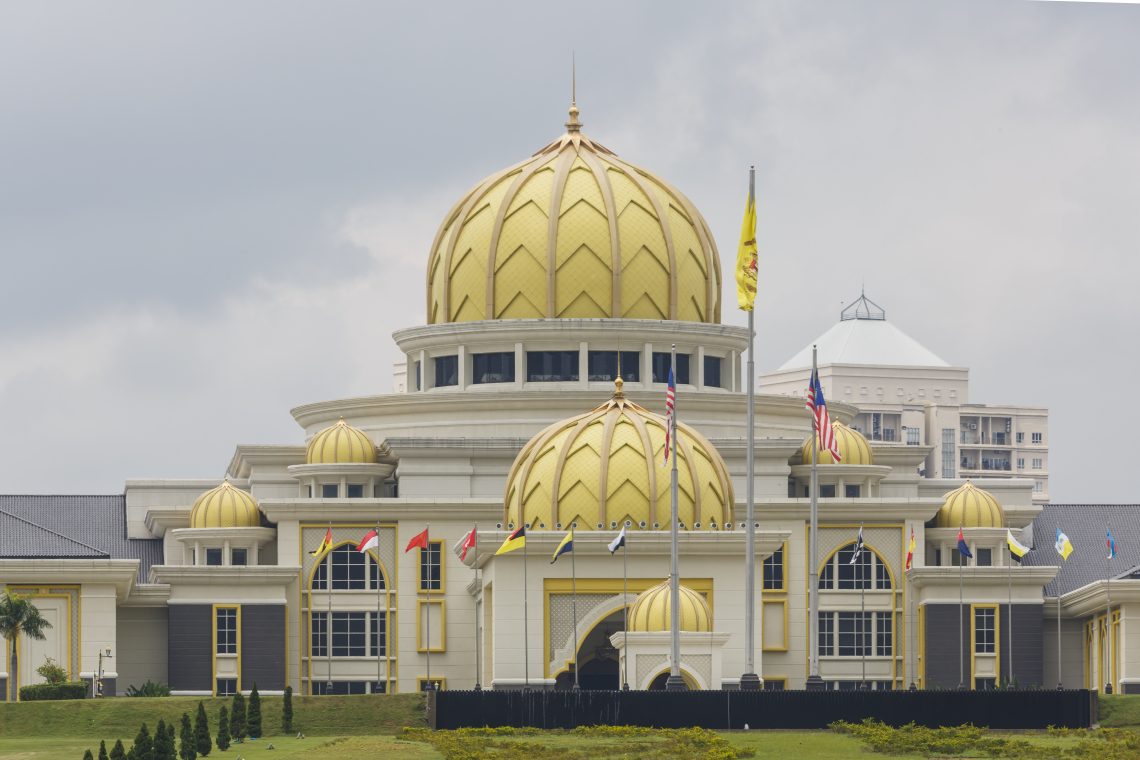
Tony Pua, a Malaysian politician, recently stated that royal decrees (titah diraja) are not laws and need not be obeyed. He emphasized that the Federal Constitution is supreme and that constitutional monarchs have limited powers. His remarks followed the Sultan of Selangor’s decree banning pig farming in the state. This same issue also arose after the Tengku Mahkota Pahang’s decree that the Malaysian Armed Forces require permission from the Sultan before conducting training within the state of Pahang, citing environmental concerns.
Malaysia’s system of government is unique compared to western democracies. While Parliament is often seen as the sole law-making body, the Constitution vests legislative power in both Parliament and the Yang di-Pertuan Agong. The monarchy’s powers, however, are generally exercised on the advice of the government.
Beyond formal duties, members of the Royal Institution often take on additional roles in areas such as education, healthcare, and environmental protection. These are not legal obligations but acts of responsibility. As a result, many Malaysians look to the monarchy for guidance, and royal decrees often attract significant public attention.
The question remains: do royal decrees carry legal weight? Consider a hypothetical scenario where a Sultan decrees that Malaysians cannot leave their homes after 10 p.m. Such a decree would be unacceptable because daily life is not governed by royal pleasure. By contrast, government-imposed curfews during the Covid-19 pandemic were accepted because they were backed by legal authority. This shows us that royal decrees are not laws or legally enforceable but may serve as nudges to lawmakers.
In May 2026, the Selangor Royal Institution clarified that royal decrees are advisory in nature, serving as a check and balance on government. Thus, disobeying a decree is not illegal. However, the monarchy’s advice and functions are highly valued by society, government, and the courts.
For example, in Public Prosecutor v Hem Pan [2024] MLJU 181, the Sessions Court Judge considered a royal decree from Pahang on eliminating threats to wildlife when sentencing accused persons for wildlife offences. This shows that while decrees are not binding laws, they can influence judicial reasoning.
The Tengku Mahkota Pahang’s decree is also an interesting example. While it was also not legally enforceable, the Malaysian Armed Forces were quick to express gratitude and pledged compliance with the decree. This shows us that a lack of legal enforceability does not equate to a lack of influence
Ultimately, royal decrees hold moral and societal weight but lack legal enforceability. They are not laws, and it is not illegal to disobey them. Yet, their influence remains significant in shaping public discourse and guiding government policy. Unfortunately, instead of fostering healthy debate on the monarchy’s role, Tony Pua’s remarks have been referred to the police—raising the broader question of whether the government should rule to please the masses, or govern over the masses?
About the Author
Sahain is a Senior Legal Associate of XK Law. He graduated with Honours from the National University of Malaysia. Sahain believes that the legal fraternity plays an integral part in the operation of the rule of law in Malaysia and is keen to utilise his legal education towards the betterment of society and the country.
Disclaimer: This post is not intended as a solicitation, is not legal advice, and is not a substitute for obtaining legal advice. You should not act upon any such information without first seeking qualified professional counsel on your specific matter.